
Puzzles are great learning and teaching tools.
When I plan a lesson with a puzzle, I always have them begin with the corners.
Some kids will want to jump into a puzzle and start matching pieces that they find. I always re-direct them into looking for the corner pieces first. This gives a rudimentary structure and sets a goal that can be accomplished fairly quickly.
Now, what is a corner?
If it is a “framed” puzzle (the pieces fit inside the cardboard frame) look for pieces that have the same colors as the four outside corners. These are usually puzzles for younger kids, usually have fewer pieces, and may have curvy sides rather than straight edges.
If it is a “jigsaw” type puzzle, look for pieces that have two adjoining straight edges. These puzzles are usually for older kids, usually have between 12 and 48 pieces, and have straight edges.
Identify the corners and practice finding them.
Compare pieces to the picture of the puzzle. Find pieces that match each corner of the the picture. Count out the corners: one corner, two corners, three corners, four corners. Touch them as you count them. 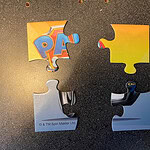
After finding the corners, identify the top and bottom edge pieces, and the left side and right side edge pieces.
Side (or top/bottom) pieces have one side that is plain (straight or curved) and the other 3 sides have edges that meet or match another piece. Confirm your choices by looking at the picture. Have them place these pieces in their position in the frame or their approximate position on the table.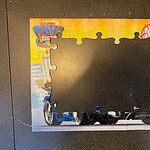
Present a vocabulary or articulation puzzle picture chosen for the sound you are working on. After having the child label the picture for sound production or vocabulary development, give a puzzle piece. Reinforce where the piece goes (corner, top, bottom, etc.)
To increase the difficulty, have the child give the function of the picture. Reinforce using a complete sentence. Upon success, let them choose a piece of the puzzle.
If practicing sound production, reinforce where the target sound is in the word. Reinforce correct production in words and then in sentences. Upon success, let them choose a piece of the puzzle.
Increase use of language by incorporating location (where do you find it), attribute (color, size, shape) and category (what is it a type of). Upon success, let them choose a piece of the puzzle.
To increase use of more spontaneous language, give the child three choices of puzzle pieces. Have them describe the piece they want without pointing or saying “that one.” Choose a picture with a target word (either sound production or vocabulary), hide it and describe it to the child by category, function, location, and attribute. Have them tell you what the hidden picture is and how they know.
Present the child a choice of 3 puzzle pieces. Describe the piece you want them to choose.
After completion of the puzzle, reinforce corners, top, bottom, left side, right side, and middle as you put the puzzle away. “Let’s take all the corner pieces and put them in the box. Now give me all the pieces from the Top edge of the puzzle and put them in the box.
*For a framed puzzle, when the puzzle is put together, it is “in the box” and can be put away.